
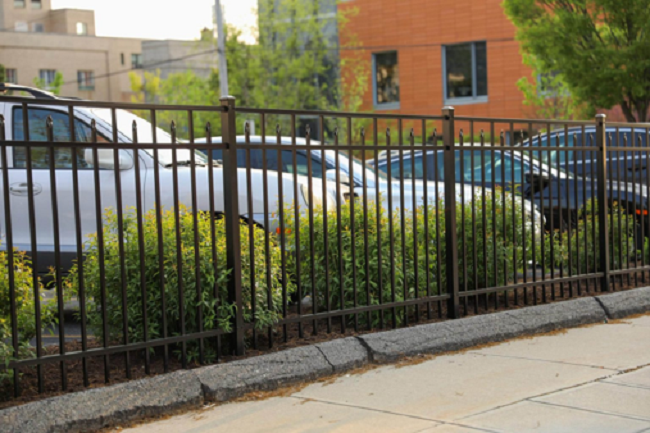
Quick answer: To choose the right fence, start with what you actually need it to do, whether that’s privacy, security, or simply marking a boundary, then match the material to your budget and your garden’s exposure to wind and damp. Stick to 2 metres or under for side and rear boundaries (1 metre near a road) to avoid planning permission, and always check your title deeds before you touch a shared boundary. Get those two things right and the rest of the decision becomes much easier.
- Why the Fence Decision Matters More Than You’d Think
- Step 1: Work Out What You Actually Need
- Step 2: Choosing How to Choose Fence Materials
- Step 3: Check the Rules Before You Buy Anything
- Conclusion
- FAQs
How to Choose a Fence?
Why the Fence Decision Matters More Than You’d Think
A fence is one of those jobs homeowners tend to underthink. You’ve decided you want one, so you ring round for a few quotes and go with whoever’s cheapest or free first.
Honestly, I get why. It’s a boundary, not a kitchen extension.
But how to choose fence materials and heights properly actually shapes how your whole garden feels for the next 10 to 20 years, not just how it looks the week it goes in.
Get the height wrong, and you could end up applying for retrospective planning permission.
Get the material wrong for your soil and exposure, and you’re staining or replacing panels every year instead of every three.
We’ve fitted a huge range of garden and boundary fencing across Milton Keynes, and the properties that end up happiest with their fence are almost always the ones where the owner paused before buying, rather than after installing.
Step 1: Work Out What You Actually Need
Before you look at a single panel, answer this properly: what is the fence actually for?
Privacy from a neighbouring garden is a different job to keeping a dog contained, and both are different again from simply marking where your land ends.
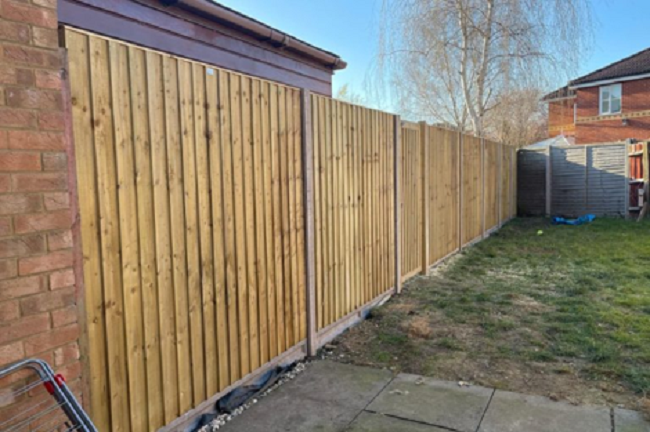
Privacy first? You’ll want full closeboard or solid panel fencing with no gaps, usually at or close to the 2 metre limit.
Is security the priority? Look at post spacing, panel rigidity, and lockable gates, not just height.
Just marking a boundary? Picket or lower-level panel fencing does the job without blocking light or views.
Wind exposure a factor? Solid panels catch wind like a sail. In an exposed garden, slatted or louvre-style fencing lets air through and survives storms far better.
There’s also the practical question of whose land the fence sits on and who’s responsible for maintaining it.
Contrary to what a lot of people assume, there’s no UK rule that says you automatically own the fence on your left as you look out from the house.
Ownership comes down to your title deeds, where a “T” mark on the boundary line shows who’s responsible, and an “H” mark shows the responsibility is shared. If your deeds are silent on it, whoever has historically maintained the fence is often treated as the owner.
It’s worth five minutes checking the Land Registry plans before you order anything, because replacing a fence that isn’t legally yours can cause more of a headache than the original problem.
Step 2: Choosing How to Choose Fence Materials
This is where most of the budget decisions get made, and where I see people go wrong most often in this line of work.
Timber panel fencing (overlap or lap-style) is still the most popular choice for UK gardens, largely because it’s the cheapest to buy, typically £20 to £50 per panel for materials alone.
Closeboard fencing costs more, usually £50 to £75 per metre installed, but it’s noticeably stronger and copes better on sloped or uneven ground, which is common on a lot of Milton Keynes new-build plots.
Composite fencing sits at the premium end, often £120 or more per panel, but it can last up to 20 years with barely any upkeep, which changes the maths if you’re planning to stay put for a while.
A rough materials comparison:
| Fence type | Typical panel/metre cost | Maintenance | Best suited to |
| Timber overlap | £20–£50 per panel | Stain or treat every 1–2 years | Budget projects, quick privacy |
| Closeboard | £50–£75 per metre | Occasional treatment | Slopes, wind exposure, longevity |
| Composite | £67–£120+ per metre | Minimal, occasional wash | Long-term, low-maintenance gardens |
| Metal/security | Varies widely | Very low | Commercial sites, high-security needs |
Step 3: Check the Rules Before You Buy Anything
This bit’s genuinely non-negotiable, and it’s the part a lot of DIY guides skim over.
Under the Town and Country Planning (General Permitted Development) Order 2015, most side and rear garden fences in England can go up to 2 metres high without planning permission.
Fences, gates and garden walls don’t need building regulations approval, but they still have to be structurally sound, and if you’re dealing with a party fence wall, the Party Wall Act 1996 may require you to formally notify your neighbour first, though this doesn’t apply to timber fencing.
Conclusion
Learning how to choose fence materials and heights really comes down to three things: know what the fence needs to actually do, pick a material suited to your garden’s conditions rather than just the lowest quote, and check the height and ownership rules before anything goes in the ground.
Get those right, and you’ll avoid the two things that cause most fencing regret: a panel that can’t handle the weather and a boundary dispute that didn’t need to happen.
If you’d rather have someone local handle the measuring, the materials, and the planning checks for you, our team looks after fencing in Milton Keynes projects on both residential and commercial properties, alongside our wider gardening maintenance services across the same area.
Get in touch with Saunders Gardening Services for a free, no-obligation fencing quote, and we’ll help you land on the right fence the first time.
FAQs
Do I need planning permission for a garden fence in the UK?
Usually not, provided your rear or side fence stays at or under 2 metres, or 1 metre next to a road or footpath used by vehicles. Listed buildings and conservation areas can carry stricter limits, so it’s worth checking with your local council first.
How do I know which side of the fence is mine?
Check your title deeds and Land Registry plans for a “T” mark, which shows who’s responsible for that boundary. There’s no legal rule based on left or right, despite what a lot of people assume.
What’s the best fence for a windy garden?
Solid closeboard or overlap panels catch wind like a sail, so slatted, louvre-style, or lower-height fencing generally holds up better in exposed spots.
How often does a wooden fence need maintaining? Timber fencing needs staining or treating every 1 to 2 years to protect against rot and moisture, particularly in the UK’s typically damp climate.
